Most relationship frustration stems from a mismatch between what you expect and what you contribute.
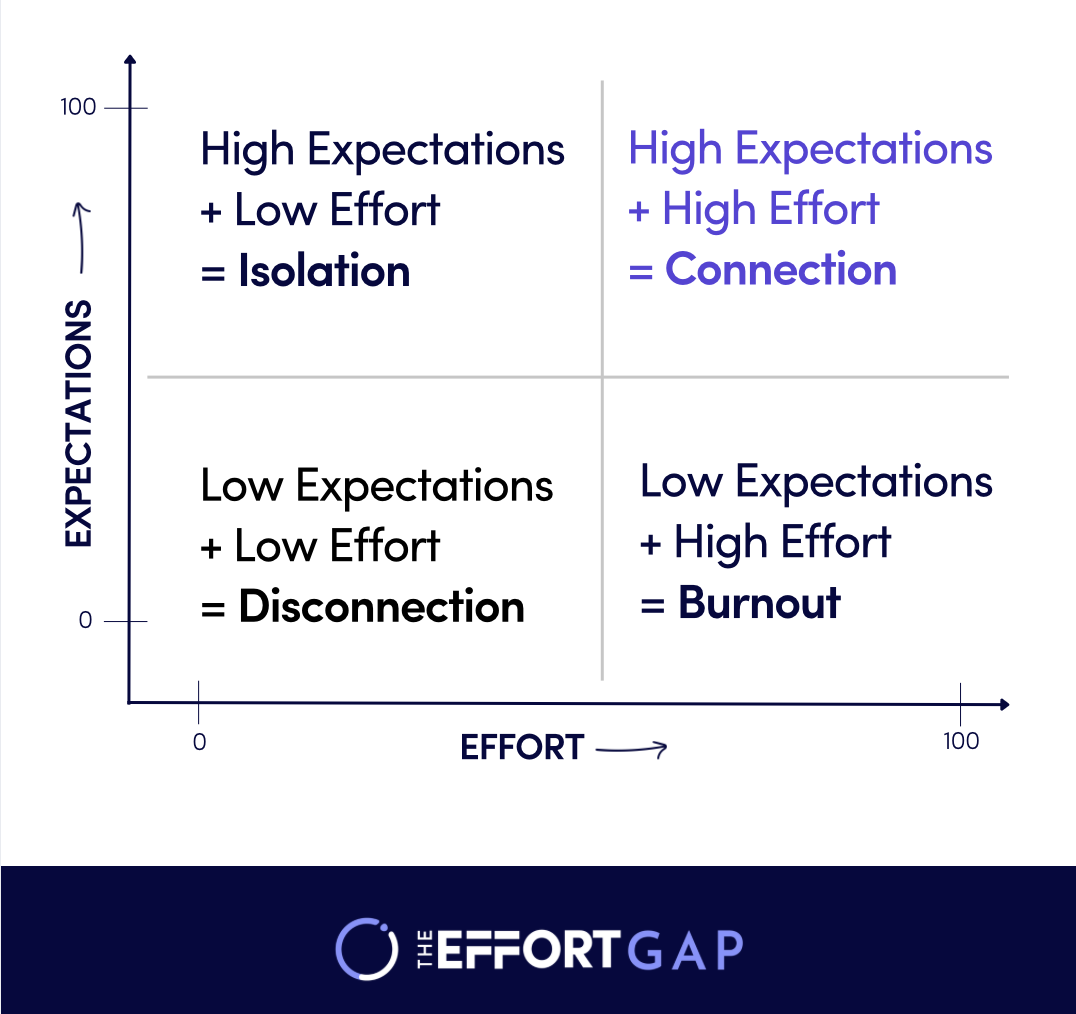
Relationship Expectations vs Effort
- High expectation + low effort → isolation
- Low expectation + low effort → disconnection
- High effort + low expectation → burnout
- High effort + high expectation → sustainable connection
1. The Demander: High Expectation / Low Effort
“The Demander” expects depth, consistency, and understanding out of relationships.. but doesn’t invest that level of effort equally. They hold high standards for effort, communication, and responsiveness. They’re easily (and frequently) disappointed in others. It’s not because they’re surrounded by terrible people. There’s an imbalance between relationship expectations vs effort.
People pull away from Demanders because being around them feels like an evaluation, which leads to performance over connection. “Am I saying the right thing, acting the right way, and meeting this unspoken standard?” Performance is followed by exhaustion. Then avoidance. The relationship is ultimately strained, and it reinforces the Demander’s belief that “No one can meet my standards.”
2. The Disengaged: Low Expectation / Low Effort
“The Disengaged” doesn’t expect much, and doesn’t give much. They avoid relational effort, vulnerability, and initiative. Conversations are surface-level. Relational distance is viewed as normal, even preferable. You’ll hear the Disengaged say “I’m just independent,” “I don’t need anything from anyone.” Yet they suffer from chronic loneliness. They view their withdrawal as admirable self-sufficiency and low maintenance.
3. The Over-Giver: Low Expectation / High Effort
It’s a misconception that burnout results from too much effort. In reality, burnout results from effort without reciprocity or appreciation. “The Over-Giver” gives a lot and expects little in return. This person initiates, supports, and shows up consistently. They carry the weight of the relationship. In fact, they’re so concerned about other people that they downplay themselves. “The reliable one” is susceptible to burnout, resentment, and one-sided relationships.
4. The Aligned: High Expectation / High Effort
“The Aligned” gives effort and expects effort. They have realistic standards, and meet them for others too. This invites mutual effort (not perfection) into their relationships. The Aligned doesn’t withdraw when their standards aren’t met. They also don’t overextend to compensate for others. Instead, they approach each relationship with reciprocity of effort. They know when to slow their efforts and who to ramp them up for.
Some people believe that good relationships take listing what you want from people, then waiting for someone to show up with all those boxes checked. Good relationships meet baseline standards, but they also depend on what you consistently bring to the other person.
To right-size your levels of relationship expectations vs effort, ask yourself:
Where am I expecting more than I’m giving?
Am I giving more than I’m asking for?
Who am I avoiding effort with altogether?
Notice the pattern. Then choose differently.
Take the quiz to see where your effort is misaligned, or start with the free guide to shift out of overthinking and into action.